Tampilkan postingan dengan label Apple. Tampilkan semua postingan

Apple to spend cash on dividends and share repurchases

Posted by Unknown Senin, 19 Maret 2012 0 komentar
The speculation is over. Apple has announced that it will give a quarterly dividend of US$2.65/share starting from fourth quarter of 2012 (September quarter). The company will also use US$10bn for share repurchases.

Combined the dividend and the share buyback will involve an expenditure of US$22.4bn till Sep 2013.

Let consider what impact this will have on Apple by Sep 2013.

Current cash position
 
As we can see in exhibit 1, Apple currently has US$97.6bn of cash and cash equivalents and generated a phenomenal US$9.5bn per quarter in CY 2011. We will use this average for the next 7 quarters, which is in line with equity research analysts estimates.

For ex. Wedbush expects Apple to generate US$79.2bn in the next 7 quarters, J.P.Morgan US$64.7bn and Barclays US$63.8bn against our estimate of US$66.3bn.

Dividends impact
US$2.65 per share implies a quarterly dividend of US$2.5bn. This means that till Sep 2013 Apple will incur an expenditure of US$12.4bn.

Share repurchase
Apple has also said that it will spend US$10bn to buyback shares starting from 2013.

So, including dividends and share repurchase Apple will spend US$22.4bn till FY13.

Estimated cash position in FY13 (Sep 2013)
By now you would have realised that potential cash generated in the next 7 quarters is three times the proposed expenditure. So in spite of the announced dividends and share buyback, Apple's net cash position will increase by US$46.4bn by Sep 2013.


Conclusion
The measures announced today are a good start but they are insufficient. While Apple has every right to continue holding cash, returns on cash is going to be low and will drag down ROE.
 
We think that Apple can do the following to further improve cash utilisation:
  • Dividend: Eventually increase the dividends per share; Potential to change interested shareholder class
  • Buyback: A good tool, improve ROE while not giving a long term commitment like in the case of dividends
  • Acquisitions: This is an area where Apple will need to tread carefully. There are not too many opportunities available where Apple can get as high margins with as much customer loyalty as it is currently enjoying. Apple will need to weigh returns versus long term potential and strategic benefits
  • Patents: Acquiring patents (like that of Nortel) will help Apple in the long term, even if the benefits are not evident immediately
Still Apple should be proud of having this headache, after once coming very close to bankruptcy. A great turnaround indeed!

Baca Selengkapnya ....

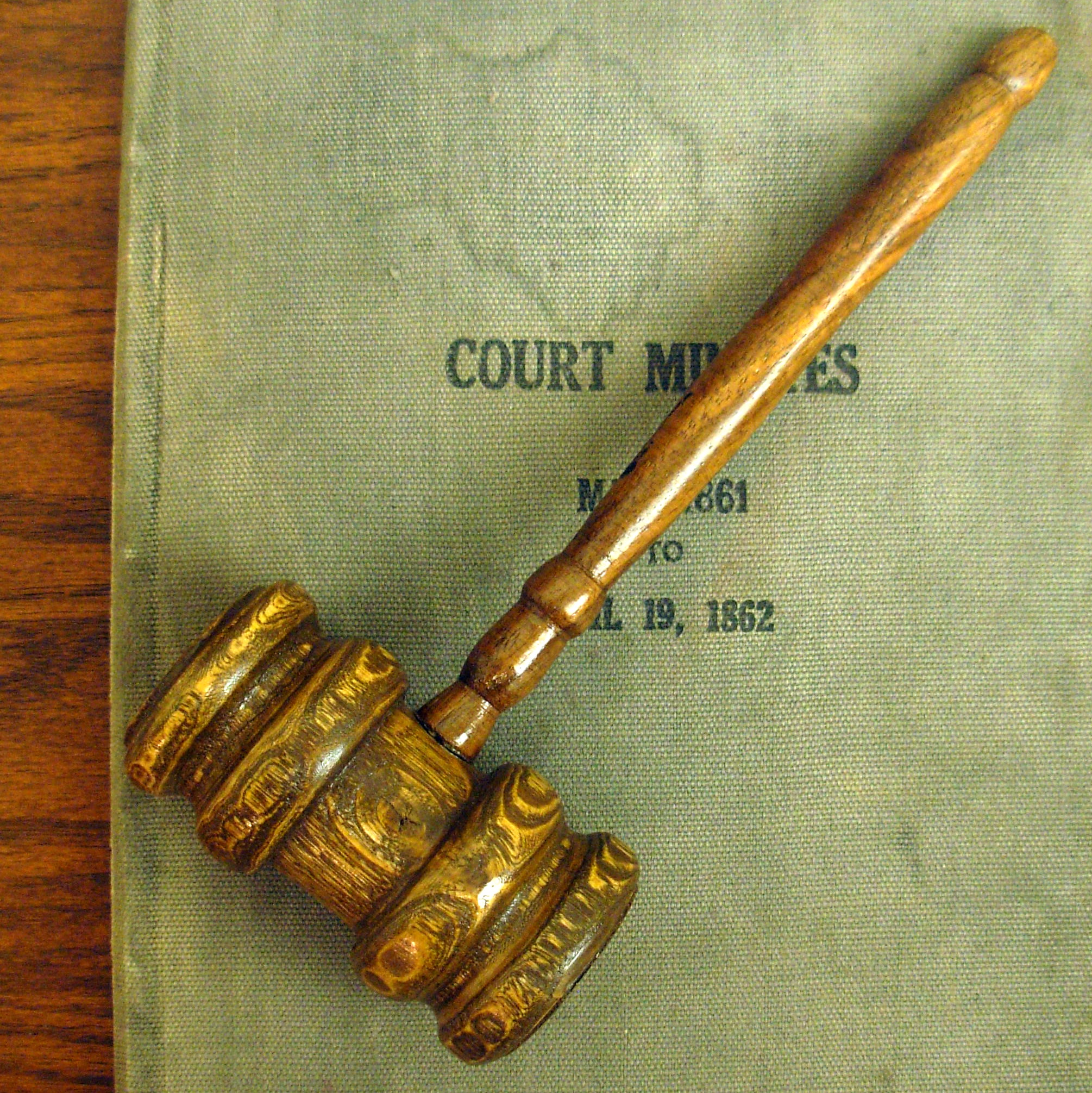
Apple scores crucial patent victory against Samsung; FRAND patent counter strategy of Google at risk

Posted by Unknown Kamis, 15 Maret 2012 0 komentar
Photo credit: Wikipedia
As reported by Foss Patents, The dutch court has ruled that Samsung has to offer fair, reasonable and non-discriminatory (FRAND) licensing terms to Apple for patents essential to 3G/UMTS standard. The ruling will also prevent Samsung from seeking injunctions against Apple's products, using these standards.

This is a crucial victory for Apple which could have major impact not just on Samsung, but also on Google and Android as it limits the use of standards essential patents (SEP) as legal tools against competitors.

Netherlands court ruling
The court has ruled that Samsung is obligated to offer FRAND licensing terms to Apple for the standards essential 3G/UMTS patents. The court said that Samsung cannot pursue injunctions against Apple as it appears inclined to discuss licensing terms — Apple has only objected to the royalty rate, terming it high.

The court also said that Samsung cannot assert 3G/UMTS patent on iPhone 4S due to "patent exhaustion". Apple had purchased baseband chips from Qualcomm which already had licenses to 3G/UMTS patents which Samsung is asserting, which logically means that they should be covered by the said patents.

To pursue case against Apple, Samsung wanted to terminate its agreement with Qualcomm, but the court ruled otherwise saying that Samsung cannot do so due to the commitments made to ETSI to grant irrevocable licenses for its 3G/UMTS patents. ETSI is the standards body in charge of 3G.

This means that there will be no extra royalty on iPhone 4S, as it is already paid by Qualcomm.

The only piece of moderately positive news for Samsung was that it can pursue cases against Apple for phones which used Infineon chips until January 2011 as well as Intel baseband chips (Intel acquired Infineon's mobile baseband chip division). Though, Apple has a chance to apply for patent exhaustion till March 28.

Impact on Samsung
The dutch courts decision effectively means that Samsung's, and indeed Google's, main counter strategy against Apple of using SEP's is not working. Samsung has already lost similar cases in France and Italy and had withdrawn a case in Germany, albeit with an option to sue later.
The verdict on patent exhaustion means that Samsung cannot bring out cases against some devices like will iPhone 4S, which use parts already covered by the patents. In our opinion, this was a very aggressive stand taken by Samsung, where chances of victory where anyway small, hence the verdict is not a surprise.

Though, Samsung can negotiate for royalty on devices using Infineon and Intel basebands, the royalty rate will likely be low as they will not only infringe indirectly but will also involve SEPs.
So far Samsung has not won a single offensive claim against Apple anywhere in the world and this latest verdict is in line with the other verdicts, albeit much bigger. Samsung may have to eventually opt to settle with Apple and pay a royalty, just like it is currently paying Microsoft. As earlier reported, Apple had offered licensing deal to Samsung, with some important caveats to maintain product differentiation.


Impact on Google and Android ecosystem
This ruling also increases the pressure on Google. Google's primary strategy against both Apple and Microsoft is to leverage SEPs for cross-licensing without paying additional royalties or ask for a high royalty rate like 2.25% with Microsoft.

This ruling, and all previous ruling, indicates that this is not an effective strategy as the courts are not warming to the idea of suing based on SEPs, effectively removing the biggest weapon in Google's arsenal. Google and its OEMs will also not be able to command a high royalty rate which could be as low as 2 cents (depends on the patent though).

Apple and Microsoft now have the upper hand as a lot of their patents are not SEPs and hence they are free to charge a higher rate. Many Android OEMs are already rumoured to be paying Microsoft between US$5-$15 per device as royalty for patents and may now have to pay Apple a royalty.

Microsoft and Apple will succeed in moving Android from a free OS to one with a high patent risk and hidden costs, reducing its lucrativeness to Android developers. This could move the lower end market from Android to Windows and other proprietary OS'.

But this outcome depends on a lot of other issues and, unless a settlement occurs, we are a long way away from resolution, even though victory in the current round goes to Apple and Microsoft.

Ahh... It seems I have been posting only legal and patent related issues recently. Sigh... I don't expect this to reduce any time soon :(

Baca Selengkapnya ....

Apple v/s Google: Motorola tried to bully Apple in patent negotiations

Posted by Unknown Selasa, 13 Maret 2012 0 komentar
We had earlier reported that Apple had offered cross-licensing deals to Motorola and Samsung, but the talks failed due to unknown reasons and the patent wars escalated.

Now, in a document filed by the European Commissions (EC) on the proposed merger of Google and Motorola, it has appeared that the licensing deal didn't happen as Motorola/Google tried to intimidate Apple into licensing ALL of its patents, something unacceptable to Apple.

The EC document does not go into much detail on the licensing deals, but there are two interesting points. One relates to Android cross-licensing and the other relates Apple's patents and potential carve outs.

Android cross-licensing
Even before the Google-Motorola acquisition has closed, the negotiations between Motorola and Apple involved cross-licensing benefits for all Android OEMs, so that the deal will be acceptable to Google. Google apparently tried using the standards essential patents (SEP) of Motorola to benefit its entire Android ecosystem, across all OEMs.According to the EC document,
"In the context of Motorola Mobility's negotiations with Apple in late 2011 concerning a potential cross-licensing settlement, the parties discussed the scope of any potential settlement in the event that the Google/Motorola Mobility transaction is closed. From the information available to the Commission, this option envisaged a cross-licence possibly to the benefit of all Android OEMs but also with mutual carve-outs."

At the same time, Google also claimed that “it does not control Android and therefore Android's market share should not be attributed to Google but to each of the various OEMs building Android based phones.”

Now, if the market share needs to be attributed to individual Android OEM’s they should be the ones striking deals with Apple, rather Google trying to use Motorola’s essential patents in forcing Apple to do so. Clear double speaking by Google.

Recently Apple had convinced the court to direct Motorola to ask Google to hand over documents related to Android development, which was opposed by Motorola on grounds that both the companies are different. But if they can jointly negotiate cross licensing, I think the documents can also be handed over.

Licensing of Apple's patents
The other major, and more important piece of information, was that Motorola and Google wanted all the Apple's patents to come under cross licensing, so that any future litigation could be avoided. As the EC document says,
"For instance, according to Apple, Motorola Mobility has insisted that Apple cross-licenses its full non-SEP portfolio in exchange for Motorola Mobility's SEPs. Apple also argues that its refusal to accede to this demand led Motorola Mobility to sue Apple in an attempt to exclude Apple's products from the market. On the terms of Apple's own argument, Motorola Mobility's allegedly anti-competitive behavior in this regard well precedes the merger at issue in the present decision."

This was not acceptable to Apple as it wanted "carve outs" which would exclude some of the patents from the licensing as well as limit use restrictions, to keep Android and Google under control. Apple has preferred to  use patents as strategic tools rather than as revenue generator and this strategy is in line with that.

On the other hand, Google and Motorola tried to use their standards essential patents to bypass all the licensing problems for all the Android devices and OEMs.

This approach was not acceptable to Apple and something we don't think will be acceptable to Microsoft.


Google and Motorola equally responsible as Apple
This interesting piece of news highlights that while Apple and Microsoft may be considered as "patent trolls" by many wanting to either see Android dead (Apple) or make it as an important source of revenue (Microsoft), Google and Motorola are also to blame for the escalation of the patent wars.

The fate of the patent cases would likely be decided on the approach the regulators and courts take to licensing FRAND patents. If the regulators/courts allow Google to earn a high royalty fee, then it will have a huge impact, on both current licensing costs as well as future standards.

Current licensing cost will increase significantly as the other standards patent holders also increase the royalty rate. For ex. Google wants 2.25% royalty for 2% of patents as part of a standard where Microsoft currently pays currently 2 cents for the other 98% patents.

It will also massively increase the value of the future standards essentially patents, as they can be use to cripple competitions, something which will not be appreciated by the regulators.

While I am not a patent expert, I expect the essential patents to be eventually licensed at far lower terms than what Google wants. Apple has an excellent chance of enforcing carve outs and may extract significant royalty fee from the Android OEMs. This combined with Microsoft’s current royalty, will make Android infinitely less attractive than other options like Windows mobile.


Further reading:

Baca Selengkapnya ....

January 2012 US smartphone market share: Google's Android wins; RIM, Microsoft Windows lose

Posted by Unknown Sabtu, 10 Maret 2012 0 komentar

According to the latest data released by Comscore, US smartphone subscribers grew by 3.5% QoQ to reach 101.3 million units in January 2012.

In terms of smartphone platforms, Android and IOS (Apple) continue to gain market share, while Microsoft's share declined in spite of the initial launch of Lumia 710 by Nokia. RIM's market share also declined.

Google's Android and Apple's IOS continue their strong performance 
Android's impressive run continued and it gained 1.3% share in Jan 2012 to reach 48.6% market share.

IOS registered a small decline by 0.1% after gaining an impressive 2.2% in the last three months.

Both the platforms now combined account for an impressive 78.1% of the total subscribers. 

Microsoft's Windows continues to lose market share
Windows share declined by 0.3% in January, in spite of the launch of Lumia 710, which also ranked very high in the initial customer delight rankings.

But, both Microsoft and Nokia would be hoping that this trend will reverse in the coming months, as Lumia 800 and 900 sales number are incorporated.

Nokia has never been able to crack the US market, even in the old days of global domination, and would be hoping that Lumia finally gives it a strong foothold in the US.

For Microsoft also, this will the last big chance, because if Nokia fails, then the Windows platform will be dead and revenues from the the mobile segment will be limited to royalties from Android.

Globally, Nokia's Windows based handsets have done well in 4Q 2011 selling 0.9 million handsets and becoming the largest Windows smartphone vendor with a market share of 33%.


RIM - decline continues
RIM's market share continued to decline, with a loss of 0.8% share in the month of January. Overall, in the last 12 months, RIM's share has halved - from 30.4% in Jan 2011 to 15.2% in Jan 2012. There doesn't seem any near term catalyst for RIM, so expect its share to further decline


US smartphone market share historical trend


Baca Selengkapnya ....

Apple to face antitrust investigation over ebooks

Posted by Unknown Kamis, 08 Maret 2012 0 komentar
Wall Street Journal has claimed that the DOJ has warned Apple along with five of the biggest US publishers that they could face an antitrust investigation for manipulating the prices of ebooks.

Amazon's wholesale model
Amazon, pioneer of selling ebooks, used to follow the wholesale model where it used to buy ebooks from publishers at a fixed price for larger quantities and then was free to set the price to be sold to the end users. To attract more users, Amazon has sold ebooks at very attractive prices, at times much lower than available at other sources.

This was disliked by the publishers as they feared that the customers will get accustomed to lower prices, drive other publishers who will not be able to compete with Amazon on pricing leading to a monopoly situation. This could also result in limiting the ability of the publishers to set prices.

In comes Apple with the agency model
When Apple was preparing to start its iBooks digital books store, ahead of the launch of the iPad, Apple offered to implement the agency model. Under this model the publishers were free to set the prices of books in return for a 30% cut on every book sold.

The publishers than used the agreement with Apple to push Amazon towards accepting the agency model with a threat that if it doesn't follow suit, it will not be allowed to sell any more books. Amazon had vociferously opposed the agency model as it cut deeply into its low margin and high volume strategy while playing to Apple's strength of better UI, but had to eventually agree.

Five publishers including Hachette, Simon & Schuster, Macmillan, HarperCollins and Penguin were supporting Apple, while Random House stayed away citing price concerns

Resulting in rise in prices of ebooks
As the prices are set by the book sellers and not by the retailers, there is an uniformity of price across all available outlets. This also means that Amazon can no longer sell books at cheaper prices.

After the agency model was implemented, it is estimated that the prices of ebooks increased as much as 30-50%, with Amazon no longer offering new titles at US$9.99. It also had the effect of reducing Amazon's market share from 80% to 60% in North America ebooks segment.

Causing regulators to worry
While the sales of ebooks were rising, the increasing prices of the books was a major concern. Eventually, a Seattle, USA based law firm, Hagens Berman, filed a class action lawsuit against Apple and its five supporting publishers.

Later in December 2011, both the European Commission (EC) and the US Department of Justice (DOJ) announced and investigation in this matter. The regulators were more concerned about the increase in ebooks prices rather than Amazon being a monopoly.

This antitrust lawsuit, is with regards to the investigations underway at the DOJ. WSJ also reported that the concerned parties (Apple and the five publishers) were aiming to settle the case to avoid a potentially far more damaging court battle.

If the DOJ has its way and enforces the choice of using wholesale model, than it will have major impact on the ebook industry. For one, the prices of ebooks will fall again, possibly back to their original levels which would be favourable for the users. Amazon could also gain market share which it lost after implementing agency model.

It will also make Apple's life more difficult, Even with agency model it has not been able to take significant share and is in third place behind Amazon and Barnes & Noble. If the wholesale model is adapted, Apple will not be able to compete on price and might even make a partial strategic retreat considering that it prefers businesses with high margins.

Overall the news is very positive for Amazon and negative for Apple.

Baca Selengkapnya ....

iPad 3 launched, specs as expected

Posted by Unknown Rabu, 07 Maret 2012 0 komentar
Apple has just announced the launch of iPad 3. Most the features were as speculated. Following are the key features highlighted by Apple.


Resolution
The new IPA will have a resolution of 2048*1536 or 3.1mm pixels. This indicates a 264pixels per inch (poi), short of the 300 ppi Apple claimed for retina display, still a major improvement.

Many apps will need to be modified to take advantage of the new resolution. Apple indicated that apps like Safari have already been optimised. Expect other app developers to follow soon.

Processor
Improvement  after moving to quad core graphics processor, though the main processor is a dual core SoC.
Apple has also claimed that the new A5X processor is four times as fast as the Tegra 3 from nVidia, which, sounds unbelievable. Expect new tablets specs to radically change after this.

Camera
A much improved 5MP camera has been included with iPad 3 with auto exposure, auto-focus, auto face detection, auto exposure lock and autofocus lock features.

iPad 3 can also record videos at 1080p resolution.

Network support
The new iPad 3 will support LTE and there will be two versions, one for AT&T and the other for Verizon. LTE will allow theoretical speeds of up to 73Mbps.

HSPA+ (21 Mbps) and DC-HSDPA (42Mbps) are also supported.

Pricing
  • Wifi models- 16GB: $499, 32GB: $599, 64GB: $699
  • 4G models- 16GB: $629, 32GB: $729, 64GB: $829

Availability
Available for pre-ordering from today. Will hit retail stores on March 16.

Baca Selengkapnya ....

LIVE: Key highlights from Apple conference

Posted by Unknown 0 komentar
  • 172mn postpc devices (iPad, iPhone and iPod) were sold in 2011
  • Postpc devices made up 76% of sales in Q4 2011
  • Retial provide best buying experience
  • iOS is an important part of the total experience
  • One of the most popular feature of iOS is Siri
  • Siri will now be avialable in other parts of the world
  • Siri is going to be launched in Japanese
  • Apple TV, available next next at US$99
  • 15.5mn iPads sold in last quarter, more than any PC manufacturer sold PC's
  • iPad is the favourite device for many things incuding reading and browsing
  • iPad 3 launches
  • Retina display - 2048*1536 pixels or 3.1mn
  • 264 pixels per inch, enought o call it a retina display according to Apple
  • A5Xchip - Quad core graphics
  • Better camera: 5MP backside illuminated sensor, 5 element lens, hybrid IR filter
  • Camera also has auto exposure, auto-focus, auto face detection, auto exposure lock and autofocus lock
  • Full HD resolution, HD video recording now at 1080p resolution
  • iPad now supports  English, British English, Australian English, French, German and Japanese languages
  • iPad 3 has LTE
  • iPad 2 supported EVDO, HSPA. iPad 3 supports HSPA+ and DC-HSDPA
  • iPad 3 priced at US$499
  • $499,$599,$699 for 16/32/64GB versions for wifi
  • Available from Mar 16 in stores, preordering today
  • 10 hours of battery life, 9 hours on 4G
  • Safari updated to take care of retina display

That concludes the part of the event we were waiting for. The launch of iPad 3! Also check our previous speculation on iPad 3 in this post.

Thanks Ars Technica for the live coverage :)

Baca Selengkapnya ....

Apple offered Motorola and Samsung licensing deals at US$15 per device

Posted by Unknown 0 komentar


Apple has been portrayed in the general media as a bully trying the stop Android from becoming competitive. This had been reinforced when Steve Jobs famously called Android a “stolen product” and said “I will spend my last dying breath if I need to, and I will spend every penny of Apple's $40 billion in the bank, to right this wrong... I'm going to destroy Android, because it's a stolen product. I'm willing to go thermonuclear war on this.”

But according to sources at Dow Jones Newswires, Apple, like Microsoft, had offered Motorola and Samsung a licensing deal, albeit at a high price ranging from US$5-$15 or ~1.0-2.5% per device.
Sources also claimed that Apple wanted to offer licenses only to select competitors and not all of them, in line with the generally thinking at Cupertino to use patents as a strategic advantage.


But there is more than what meets the eye
It might appear from first glance that Apple was ‘generous’ to give the Samsung and Motorola licensing deals, which they should have accepted. But a closer look gives a completely different picture.
For one, while Apple has had some success, it has been limited. It has not been able to get injunctions to stop competitor’s products like Galaxy phone and tablet from being sold. ‘Innovations’ in the mobile space is going at a breathtaking space; hence the window of opportunity is less. If, within that time frame, Apple is not able to stop competitor’s products, the opportunity is over. Also there is always a risk of new devices being launched, which makes the advantage of injunctions limited.
Another reason is that Android is now widely used, and it will be very difficult to stop it. It may be possible to do in the US, if everything went according to plan, but extremely difficult to enforce it across the globe.

Also, once some of the competitors accept the validity of patents; it can be used effectively against others. Validation of patent without spending anything would be a good for even Apple.
Offering licensing deals to competitors also have the added advantage that in the court the company does not appear very stubborn and might even look that Apple tried to do injunctions only as a last resort. The company had already told an Australian court last year that “Jobs had begun discussions with Samsung in the summer of 2010, in part because of the close relationship between the companies. But those talks broke down when Samsung released its first Android- based tablet, the Galaxy Tab, in the fall of 2010.”
But, probably, the most important reason was to substantially increase the cost of Android. Microsoft is already rumoured to charge between US$10-$15 per device and reportedly vendors selling 70% of the Android devices in the US have taken up the offer

Assuming US$10 for both Microsoft and Apple would mean an increase of US$20 per device, which would significantly cut the margins and might even make many of the low end devices impossible. This will not only be a new source of revenue for Apple (though arguable a small portion), but could also be used to effectively stop Android from becoming a dominant mobile OS platform.
It also had the added advantage of shielding Apple against royalty claims for standards essential patents, a win-win case for Apple.


Samsung – the big question
It remains unclear why Samsung didn’t even consider Apple’s offer, especially when it is rumoured to pay the same amount to Microsoft. Maybe Samsung thought that Apple’s patent weren’t credible enough to withstand in court. It also appears possible that Samsung assumed, wrongly, that Apple was so dependent on it that the threat of a legal challenge was minimal.
It should be note that Apple was once heavily dependent upon Samsung for some of the most important components including RAM and storage memory. The companies enjoyed excellent relationship, before Samsung’s rise in the mobile world and the patent war’s soured it. Since then Apple has made some efforts to diversify from Samsung, which means that if Samsung loses case against Apple it will not revenues from mobile devices will take a hit, but revenues from its component division will also be affected.
While the two  companies might be able to eventually mend their relationship it seems difficult to believe that, in the near term, it will come anywhere near the level they enjoyed before.

Baca Selengkapnya ....

Samsung targets iPad/iPhone again, this time in Korea

Posted by Unknown 0 komentar
While Apple is looking to launch its much anticipated iPad 3 today, Samsung is playing the role of the spoisport by launching a new lawsuit in South Korea claiming that iPad 2/iPhone 4S infringers on three of its patents. It can be expected that after iPad 3 is launched, Samsung will add it to the list.

What do the latest lawsuit cover
According to a Reuters news article, the three patents involves methods of displaying data, the user interface, and short text messages.

Interestingly, while all the patents are important for the devices, none of them related to standards essential patents. But this also means, that Apple may be able to work around them, if necessary, though the user interface might suffer.

Finally...Korea in the fray!
So far, while Samsung has filed various cases against Apple in countries including Japan, Germany, UK, Netherlands,  France, Italy, Austrlia and the US, it hadn't been very agressive in Korea and had dropped a suit in November against Apple.

But Samsung, is currently under immense pressure, and has not made any head away against Apple. This might have forced them to seek some confort in their home market, even if it gives them negative publicity.

According to Foss Patents, Samsung cotribute 10% directly to Korea GDP and maybe as much as 20% indirectly, and hence will have huge influence. It has also been rumoured that when a German court banned sales of Galaxy Tab 10.1, a Korean ambassador contacted the German governemnt and expressed concern.

We will update when we have more news.


Baca Selengkapnya ....

Judge asks Google, Motorola to hand over sensitive documents to Apple

Posted by Unknown Selasa, 06 Maret 2012 0 komentar
According to a Bloomberg news report, Google and Motorola have been ordered by a US judge to handover documents related to development of the Android operating system to Google. The two companies have also been asked to handover documents relating to the merger of Google with Motorola.

Background
The fight has its root in the lawsuit filed by Apple against HTC in March 2010 claiming that HTC's products infringed on 10 of Apple's patents.

The fight between Apple and Motorola started when Motorola filed a lawsuit against Apple in October 2010 claiming that iPhones, iPads, iPod touches and even some Mac violated Motorola's patents. In total, Motorola's four complaints cited 18 patents, which according to it were infringed.

Later Motorola joined the Apple-HTC lawsuit asking the judge to invalidate 20 of Apple's patents on its products.

After this Apple turned its attention towards Motorola, and in the same month, October 2010, filed two lawsuits against Motorola claiming that its products violated six of Apple's multi-touch and OS patents.

This particular case relates to the October 2010 lawsuit filed by Apple.

Preliminary court judgment
In a March 2 filing, Apple's attorneys had asked for the documents stating “The Android/Motorola acquisition discovery is highly relevant to Apple’s claims and defenses."

The judge apparently agreed with the assertion, and has asked Motorola and its soon-to-be-parent Google to submit sensitive documents related to the development of Android as well as related to the merger between the two companies. 

Google is so far not a party to the lawsuit but the judge expected that because of their relationship Motorola should submit those documents stating “Motorola shall be expected to obtain full and immediate compliance by Google with Apple’s liability discovery demands.”

Judge proposes...Motorola opposes
 As expected Motorola has opposed the request arguing that Google and Motorola are two different companies saying “Google’s employees and documents are not within the ‘possession, custody, or control’ of Motorola, and Motorola cannot force Google to produce documents or witnesses over Google’s objections.” Google has so far not commented on the judgment.

The judge has next round of the case is scheduled to be held in June 2012,  which will address the issue of six Apple patents and three Motorola patents, according to Bloomberg.

Source: Ars Technica, Bloomberg, Engadget

Baca Selengkapnya ....
Trik SEO Terbaru support Online Shop Baju Wanita - Original design by Bamz | Copyright of samsung galaxy s2.